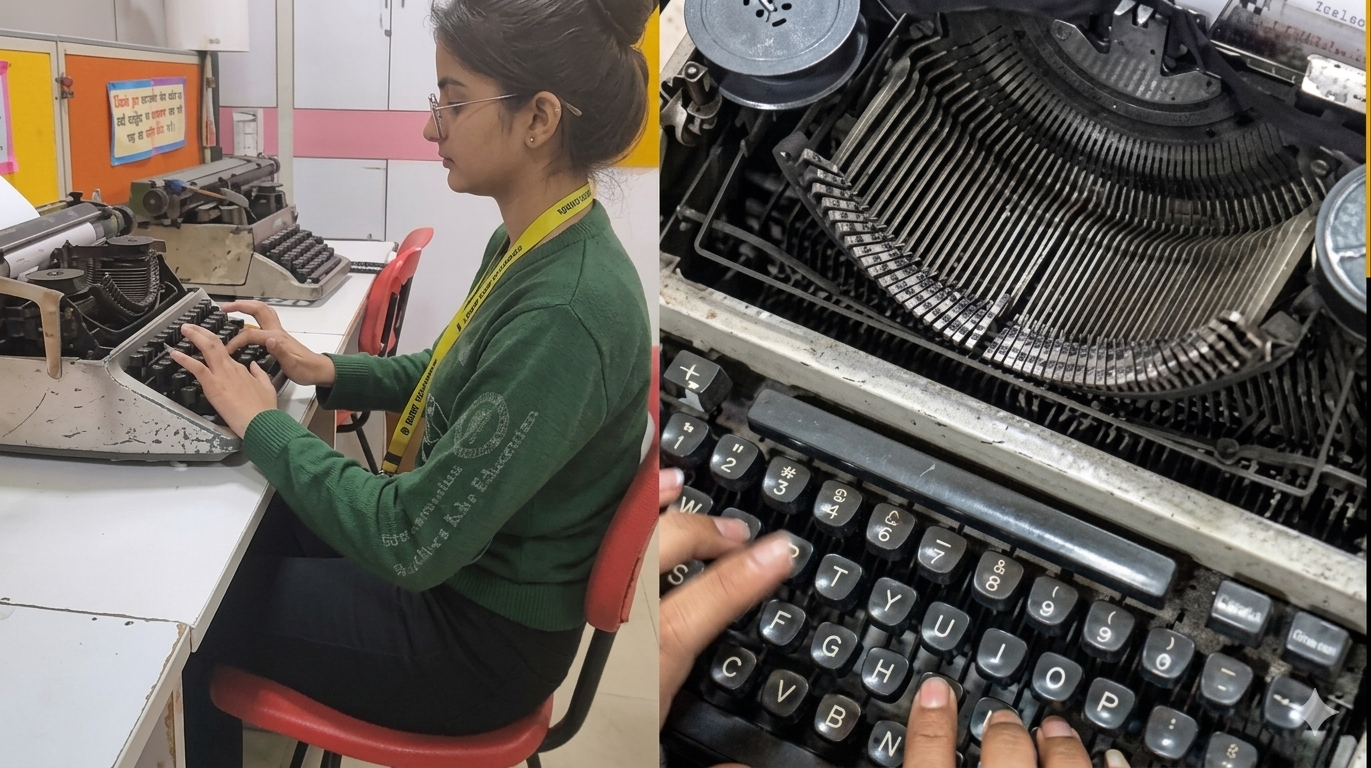
You just passed your 12th exams and now everyone around you is asking the same question: What's next?It can feel overwhelming. Engineering, medicine, commerce the options seem either too expensive, too long, or too competitive. But what if there was a career path that's quick to learn, in high demand, and opens doors to government jobs?
That's exactly where a stenography course after 12th comes in. Stenography is one of those underrated yet powerful career options that students often overlook. It's skill based, practical, and respected across government offices, courts, and private organizations. If you're someone who's looking for a stable, well paying career without spending 4 to 5 years in college, this guide is written just for you.
What Is a Stenography Course? Let's start with the basics. Stenography is the skill of writing at very high speed using a special shorthand method. Instead of writing full words, a stenographer uses symbols and abbreviations to capture spoken words in real time almost like a live transcription superpower. A stenography course teaches you two core skills:
Shorthand writing a system of quick, symbolic notation Fast and accurate typing usually on a computer or stenotype machine
Stenographers are found everywhere in courtrooms recording legal proceedings, in government offices drafting official documents, in corporate boardrooms during meetings, and even in media organizations. Wherever there's a need for fast, accurate documentation, a stenographer is essential.
Why Choose a Stenography Course After 12th? Here's why thousands of students every year choose stenography as their career:
-
Quick Career Entry Unlike a 3 year degree or a 4 year engineering program, a stenography course can be completed in as little as 6 months to 1 year. That means you could start working and earning much sooner than your peers.
-
Gateway to Government Jobs One of the biggest draws of this career is the direct path it creates to government stenographer jobs. The Staff Selection Commission (SSC), High Courts, District Courts, and various state government departments regularly recruit stenographers. These positions come with job security, fixed salaries, and benefits everything a fresher dreams of.
-
Skill Based Career You're not just getting a certificate you're building a real, measurable skill. Speed and accuracy in shorthand and typing are things you can demonstrate in any interview or competitive exam. Employers respect it.
-
High Demand Across Sectors From law firms to hospitals, from media houses to multinational companies the demand for skilled stenographers and personal assistants is consistent. It's a career that doesn't go out of style.
Skills Students Learn in a Stenography Course When you enroll in a professional stenography class after 12th, you don't just learn shorthand. A good course trains you across multiple areas:
Shorthand writing (Pitman or Gregg method, typically at 80 to 120 words per minute)
Typing speed and accuracy (targeting 40 to 60+ words per minute)
Computer basics : MS Word, Excel, email drafting
Office management : file handling, scheduling, professional communication
English grammar and vocabulary : for accurate transcription
Communication and professional etiquette : essential for working in high-level offices
These combined skills make you a complete professional, not just someone with a single trick up their sleeve.
Duration and Eligibility Who Can Join? If you've cleared your 10+2 (12th standard) from any stream Arts, Science, or Commerce you're eligible to join a stenography course. No specific subject background is required.
How Long Does the Course Take? Course Type Duration Short term Certificate Course 6 months Diploma in Stenography 1 year Advanced Stenography Program 1 to 2 years Most students complete a diploma level typing and stenography course within a year and are job ready right after.
Career Opportunities After a Stenography Course Once you've completed your training, a wide range of job opportunities opens up:
Government Stenographer Recruited through SSC Stenographer exam, High Court exams, and state PSC exams. This is one of the most sought after positions stable, well paying, and prestigious.
Court Stenographer Courts at all levels district, high court, and Supreme Court require stenographers to record legal proceedings accurately. It's a highly responsible role with excellent job security.
Personal Assistant (PA) Many senior executives, politicians, and business leaders hire personal assistants with strong stenography skills. This role often comes with high pay and career advancement.
Office Executive / Administrative Assistant Private companies, banks, and institutions hire stenographers for documentation, minutes of meetings, and correspondence management.
Freelance Transcription Work With remote work booming, freelance transcription and stenography work is a growing opportunity. You can work from home and take projects from clients around the world.
Salary and Career Growth Let's talk numbers because at the end of the day, a career has to pay the bills.
Entry-level government stenographer: ₹25,000 to ₹40,000 per month
Court stenographer: ₹30,000 to ₹50,000 per month (with grade pay and allowances)
Private sector personal assistant: ₹20,000 to ₹45,000 per month
Experienced stenographers / PAs: Can earn ₹60,000+ with promotions
Beyond salary, the career growth is real. Many stenographers go on to become senior personal assistants, office managers, or even administrative officers over time. Government positions also come with pay scale upgrades, DA revisions, and pension benefits.
Why You Should Join a Professional Stenography Institute You might wonder can I just learn stenography from YouTube or self-study? Technically, yes. Practically, it's a lot harder without structured guidance. Here's what a professional stenography institute gives you that self-study can't:
Structured curriculum designed to match exam and job requirements
Expert trainers who have real-world experience in stenography
Speed-building practice sessions with timed shorthand and typing drills
Mock tests and competitive exam preparation (SSC Stenographer, etc.)
Placement assistance connections to employers who actively hire from institutes
Certification that employers and government recruitment boards recognize
Joining the right institute can be the difference between a certificate that sits in a drawer and a career that actually takes off.
Conclusion If you've just finished 12th and you're wondering which direction to go consider giving stenography a serious thought. A stenography course after 12th is not just a shortcut to employment; it's a complete career path that offers stability, skill development, and a real shot at government jobs that thousands of students compete for every year.
The best part? You don't need to wait years to start. Within 6 to 12 months of focused training, you could be sitting in a government office, a courtroom, or a corporate boardroom doing meaningful, well-paid work. Your career doesn't have to wait. Start your stenography journey today.
Frequently Asked Questions (FAQs)
-
What is a stenography course after 12th? A stenography course after 12th is a professional training program that teaches students shorthand writing, fast typing, and office communication skills. It prepares them for roles like government stenographer, court stenographer, and personal assistant.
-
Can I join a stenography course after completing 12th? Yes, absolutely. Students who have passed their 12th from any stream Arts, Science, or Commerce are fully eligible to enroll in a stenography course. No specific subject background is needed.
-
What is the duration of a stenography course? The duration depends on the course level. Certificate courses are typically 6 months long, while diploma programs take around 1 year. Advanced courses can go up to 2 years with specialized training.
-
What jobs can I get after learning stenography? After completing a stenography course, you can work as a government stenographer, court stenographer, personal assistant, office executive, or freelance transcriptionist. Government stenographer jobs are especially popular due to their stability and pay.
-
What is the salary of a stenographer in India? A fresher government stenographer can earn between ₹25,000 to ₹40,000 per month, including grade pay and allowances. With experience and promotions, the salary can grow significantly. Private sector PAs with stenography skills also earn competitive packages.
-
Is stenography still in demand in 2025? Yes, stenography is still very much in demand especially in government offices, judiciary, and large corporations. With the consistent need for accurate documentation and administrative support, skilled stenographers remain highly valued professionals.
Ready to turn your 12th pass certificate into a real career? Enroll in a professional stenography course and take the first step toward a stable and rewarding future.